How GuppyCubed works
The core idea behind GuppyCubed is simple: capture once, organize continuously, and use everywhere.
Capture once
Data is created naturally through work you already do: running an activity, sending a questionnaire, receiving a donation, uploading a document, or recording an interview. You do not need to create a separate data-entry process just to use GuppyCubed.
You can provide information through:
- Conversations with AI about what you want to do;
- Photos and audio recordings;
- New questionnaires or imported questionnaires;
- Existing files such as Word documents, PDFs, and Excel workbooks;
- Google Drive imports.
Organize continuously
After data enters GuppyCubed, it is placed in the relevant project, activity, or knowledge base context instead of being scattered across tools. Documents are parsed, images are recognized, and audio is transcribed so the information can be searched and cited later.
Use everywhere
Once information has been organized, the same source can support multiple outputs:
- Progress summaries and management presentations;
- External reports and public websites;
- Handover material for the next task;
- Later analysis and comparison.
Different outputs can use shared sources. When original material changes, check each summary, report, and website to determine whether it needs revision.
What do AI and people each do?
One engine supports three modes of work:
| Mode | Who uses it | What they do |
|---|---|---|
| Execute | Frontline staff and project teams | Create projects, complete tasks, upload data, and record work |
| Manage | Managers, PMs, and reviewers | Monitor progress, gaps, risks, sources, and confirmation status |
| Deliver | Project leads and external communications | Produce documents, presentations, websites, and other outcomes |
AI searches, organizes, compares, and drafts, accelerating work that would otherwise take substantial time. People remain responsible for confirmation, judgment, approval, and publication. AI is a collaborator, not the accountable party. Any content intended for formal external publication must be approved by an authorized person.
Follow one interview through the workflow
A field member records an interview and checks its audio and transcript. AI drafts observations. The project owner checks important quotations, assigns unresolved statements for follow-up, and selects publishable material for the report.
| Stage | Material retained | Reviewer |
|---|---|---|
| Capture | Original audio, date, and topic | Field member |
| Organization | Transcript, summary, and draft actions | Preparer |
| Review | Quotations, facts, and unresolved points | Owner or reviewer |
| Delivery | Current output version and sources | Delivery owner |
Before reusing information
Check continued relevance. Last year’s interview is not this year’s outcome, and one participant’s perception does not establish an overall effect. When a source changes, review the outputs you intend to use; do not assume every document and website has synchronized automatically.
Choose a practical example in common workflows.
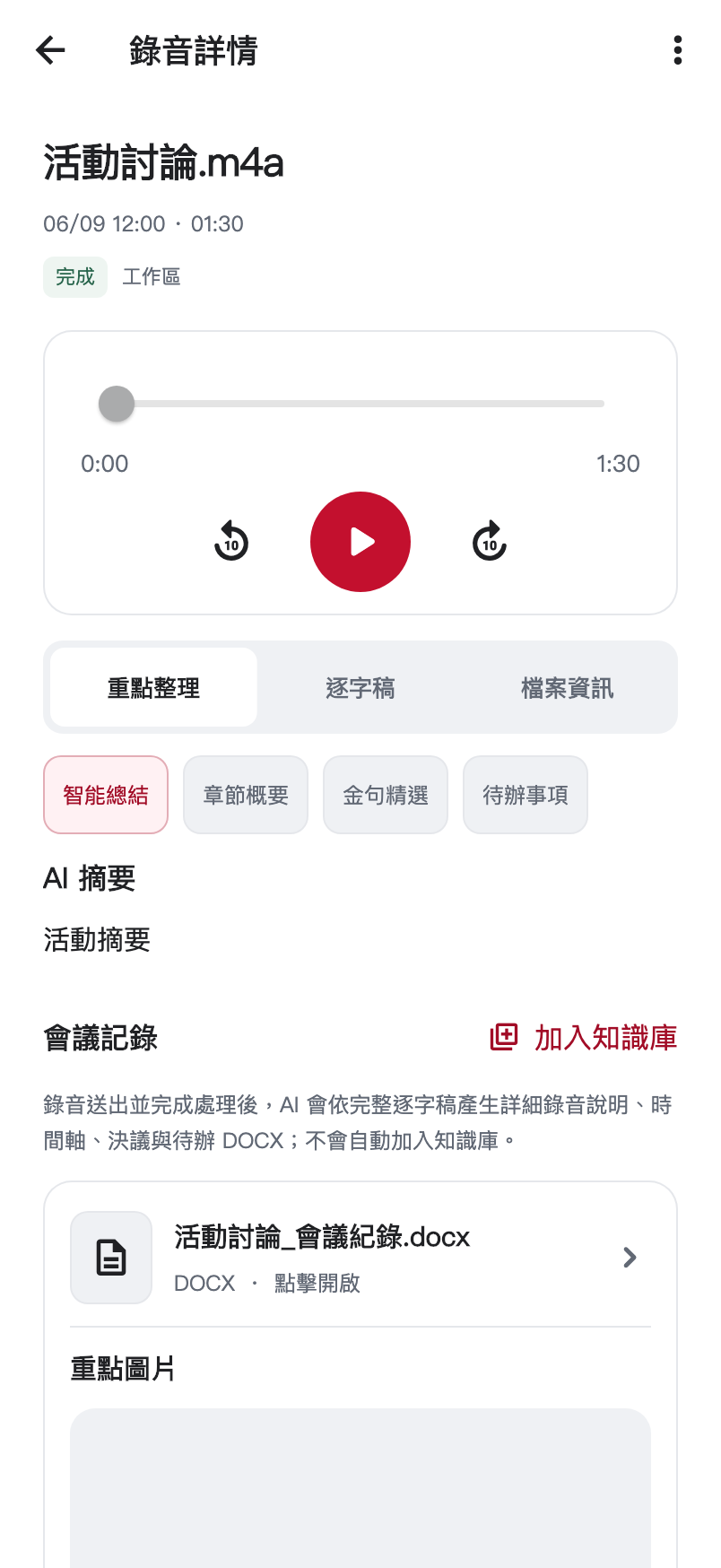
See organization through a recording
Information flow and work flow are different
Information flow concerns origin, storage, and retrieval. Work flow concerns ownership, timing, and review. Information without ownership can become an unused archive; completed tasks without supporting material are difficult to verify.
Storing workshop notes is information flow. Asking the activity contact to check venue requirements and return a reviewable answer is work flow. AI can identify actions, but the team must connect them to responsibility and delivery.
| Stage | Retain | How the next person uses it |
|---|---|---|
| Discussion | Decisions, reasons, open points | Distinguish executable decisions |
| Execution | Requirements and work material | Check the requested work |
| Organization | Original, summary, gaps | Verify meaning |
| Delivery | Adopted version and use scope | Avoid stale or unconfirmed content |
Continue after a change
If a venue changes from outdoors to indoors, update the source, then check activity descriptions, notification drafts, questions, and reports. Shared sources reduce searching but do not replace a person's decision about which outputs need revision.
Judgments that remain with people
Completeness, permission to publish an interview, fitness of a statistic, and responsibility depend on context. Express them as explicit unresolved questions so AI can organize the work without hiding gaps behind fluent text.
Next step
To learn how GuppyCubed organizes accounts and data, read Accounts, workspaces, and organizations.