Projects are the backbone of work
Projects connect work with a shared goal, while general knowledge and some activities can also use independent entries. Once you understand how projects connect other features, finding information becomes much more intuitive.
What belongs to a project?
A project usually includes:
- Goals and timeframe: What the project should achieve and how long it will run;
- Members and collaborators: Internal teams and external partners;
- Tasks: What needs to be done, who owns it, when it is due, and what must be delivered;
- Activities: Registration, check-in, volunteers, and field records;
- Questionnaires: Data collection and statistics;
- Knowledge: Documents, photos, recordings, and webpages;
- Outcomes: Reports, presentations, websites, and other outputs.
Connect relevant activities, questionnaires, and knowledge to the project, or start through independent entries. Before requesting a report, verify actual associations, selected sources, and access scope rather than assuming everything is connected automatically.
Tasks: make ownership explicit
A task can specify:
- An owner and deadline;
- Required deliverables;
- Completion criteria;
- Related files, recordings, or transcripts.
Members can view their tasks on the web or in the mobile app. Task submissions retain their delivery and review context. Material intended for broader knowledge reuse should be added through the available knowledge-upgrade flow.
A project lifecycle
Create a project
→ Set the timeframe, goals, and owner
→ Create tasks or workflows
→ Assign members and external collaborators
→ Connect activities, questionnaires, and knowledge
→ Carry out the work and collect data
→ Let AI organize it and people confirm it
→ Produce a report, presentation, or website
Managers can review all related information and progress within the project at any time, without maintaining a separate Excel tracker.
Make the project scope explicit
Describe the goal, period, owner, and first deliverable. A community interview project might first deliver checked notes and unresolved questions, then connect activities or questionnaires. A generic annual-work container makes it harder to judge whether individual tasks are complete.
Separate progress from acceptance
“Organize interviews” is vague. Specify playable audio, a checked transcript, and three observations with sources. Reviewers can then assess the same criteria instead of relying only on a completed status.
When a project is unnecessary
General organizational knowledge, reference webpages, and standalone work can use the available workspace or independent entries. Create a project when the work has a shared goal, period, and delivery responsibility.
Handoff before closing
Confirm deliverables, unfinished items, and their next owners. Preserve the source versions used. Archiving and quota accounting depend on actual settings; archiving should not be assumed to release every allowance.
Find the project context
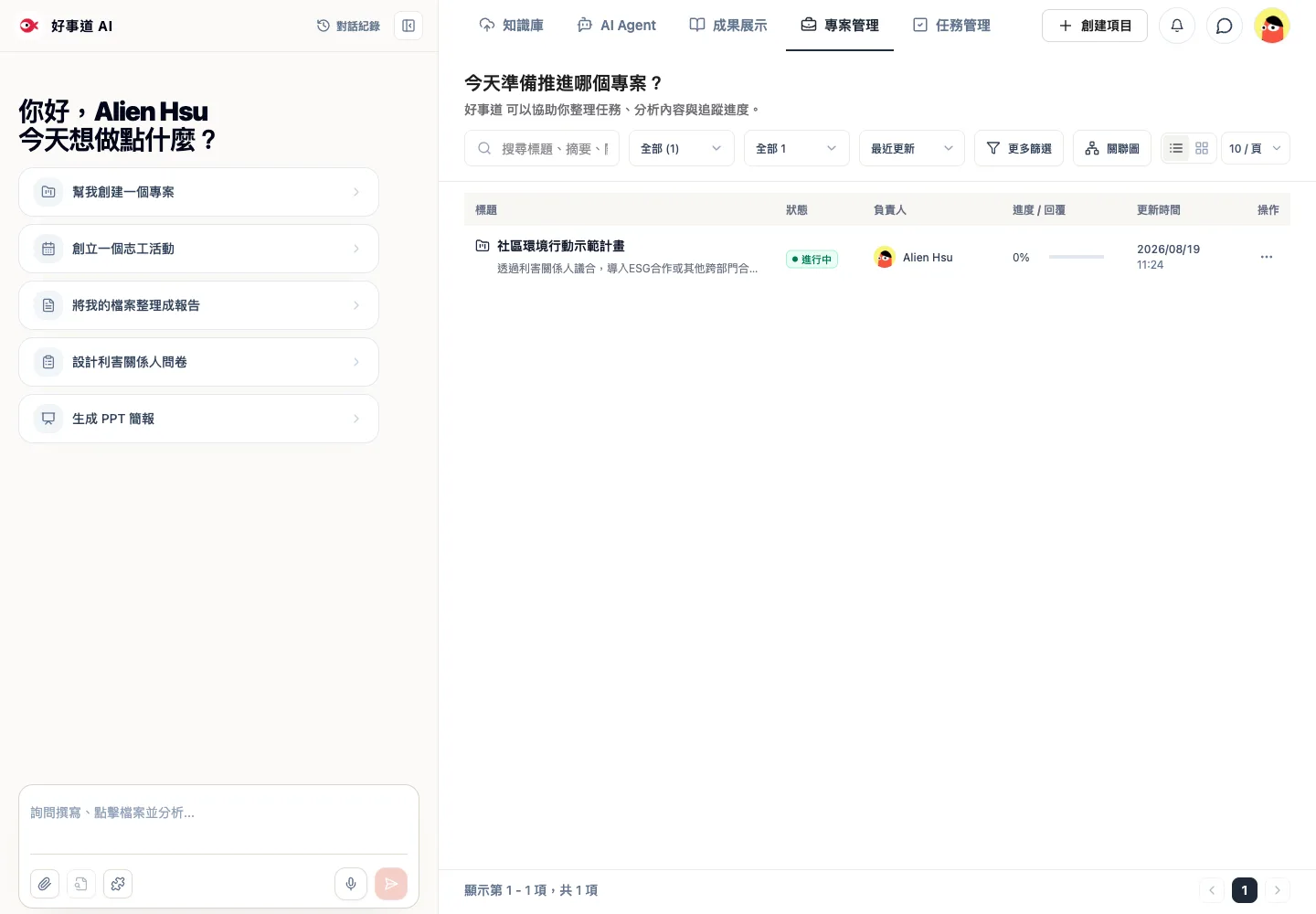
Decompose goals into reviewable delivery
Instead of assigning “finish the workshop” to everyone, identify venue checks, draft registration fields, field records, and a meeting summary. Give each deliverable an owner and the sources needed to complete it.
| Work | Vague request | Reviewable request |
|---|---|---|
| Venue | Check the venue | List access, equipment, and unresolved conditions |
| Survey | Make a good survey | Provide questions, purpose, choices, and test checks |
| Records | Organize photos | Include date, category, purpose, and public scope |
| Summary | Write outcomes | Separate completed work, feedback, and open points |
Avoid copying every reference into the project
General organizational material and reusable procedures can remain in appropriate knowledge locations. Reference or associate them through available features when needed. Project context should explain the material used rather than create another complete archive to maintain.
Review blockers before percentages
Ask which delivery lacks sources, which decision awaits a response, and which requirement changed. These questions identify actions more directly than completion percentages. Update task requirements when goals change and review whether submitted material still fits.
At closing, retain handoff material and unresolved work with a future owner. Archiving a page does not tell the next person which source or explanation was adopted.
Next step
To learn how uploaded information is retained and how its source can be found later, read Knowledge base and source traceability.