How is GuppyCubed different from ChatGPT or Claude?
What is GuppyCubed’s product focus?
GuppyCubed is an AI collaboration platform for teams and organizations. It connects conversations, projects, tasks, activities, questionnaires, recordings, and knowledge so internal and external collaborators can collect information, complete work, and organize outcomes. Sources and human review are part of that workflow.
How do I decide whether I need GuppyCubed?
Look for work that requires handoffs, ongoing collection, and deliverables. If each report starts with finding files, chasing owners, or checking what may be published, try one small project in GuppyCubed before expanding adoption.
Can I continue using ChatGPT or Claude?
Yes. Keep existing AI tools and organize relevant material and drafts in GuppyCubed. When moving information between tools, check its permitted use, version, and sharing scope. Accounts and subscriptions should not be assumed to transfer between products.
Does an AI summary count as a confirmed outcome?
No. AI helps retrieve, organize, and draft; people still check figures, sources, periods, and publication scope. Existing task submission and review do not imply automatic tracking of every outcome claim, cross-output version locking, or external assurance.
Evaluate one real workflow
For an activity closeout, select an attendance record, a questionnaire, and an interview. Assign an owner, request a source-based draft, and have the team resolve missing evidence or inconsistent figures before review.
Assess more than prose quality: can a colleague find the originals, understand the deliverable requirements, and reuse confirmed knowledge for the next activity? These are practical measures of ongoing collaboration effort.
A useful starting request
Use only the material I selected. Separate recorded facts, inferences, and missing information. Give a source and period for each figure. Propose an outline before generating the final file format.
Continue with AI collaboration workflows and sources and outcome review.
Compare a real work entry
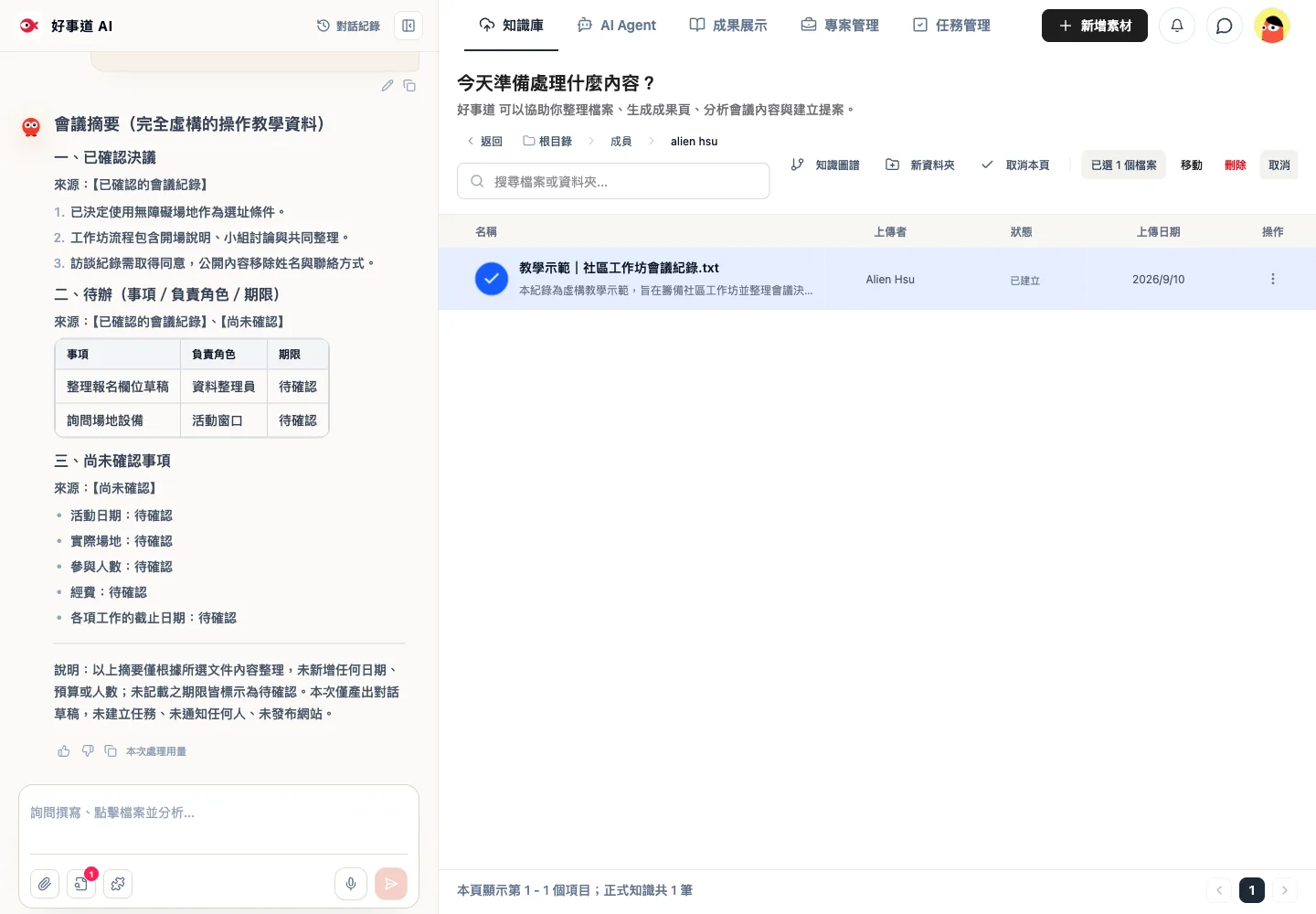
Compare using the same material
Use a permitted meeting note and identical requirements: decisions, actions, roles, and open points. Compare source fidelity, then handoff, and only then style or length.
| Dimension | Practical check |
|---|---|
| Sources | Can the right material be located and selected? |
| Organization | Are known and unknown points separated? |
| Continuation | How are responsibility and delivery communicated? |
| Maintenance | Can later members recover context? |
When an existing AI is sufficient
Personal rewriting, brainstorming, and general questions may already be served well. For multi-person work, continuing collection, and delivery, evaluate context and data management as well as an individual response.
Avoid replacing everything first
Test one cross-person workflow while retaining effective tools. For external AI connections, verify availability, authorization, and revocation; a guide page does not establish a live connection service.
Choose according to actual needs. This comparison does not claim competitors lack collaboration or sources, or that switching tools automatically improves data quality.