Best practices
Classify information when you add it
Placing uploaded information in the correct project and folder immediately takes far less time than organizing a backlog later. Put activity photos with the activity and financial evidence with the donation project so AI can find the right material.
Confirm permissions before AI reads data
Before inviting an external collaborator, make sure they can only see the appropriate project scope. GuppyCubed restricts permissions at the workspace, project, and folder levels, allowing you to collaborate externally without exposing unrelated information.
Always verify important figures against their sources
No matter how polished an AI-generated report or presentation appears, verify any figure intended for submission or publication—such as people served, donation amounts, or outcome indicators—against the original data.
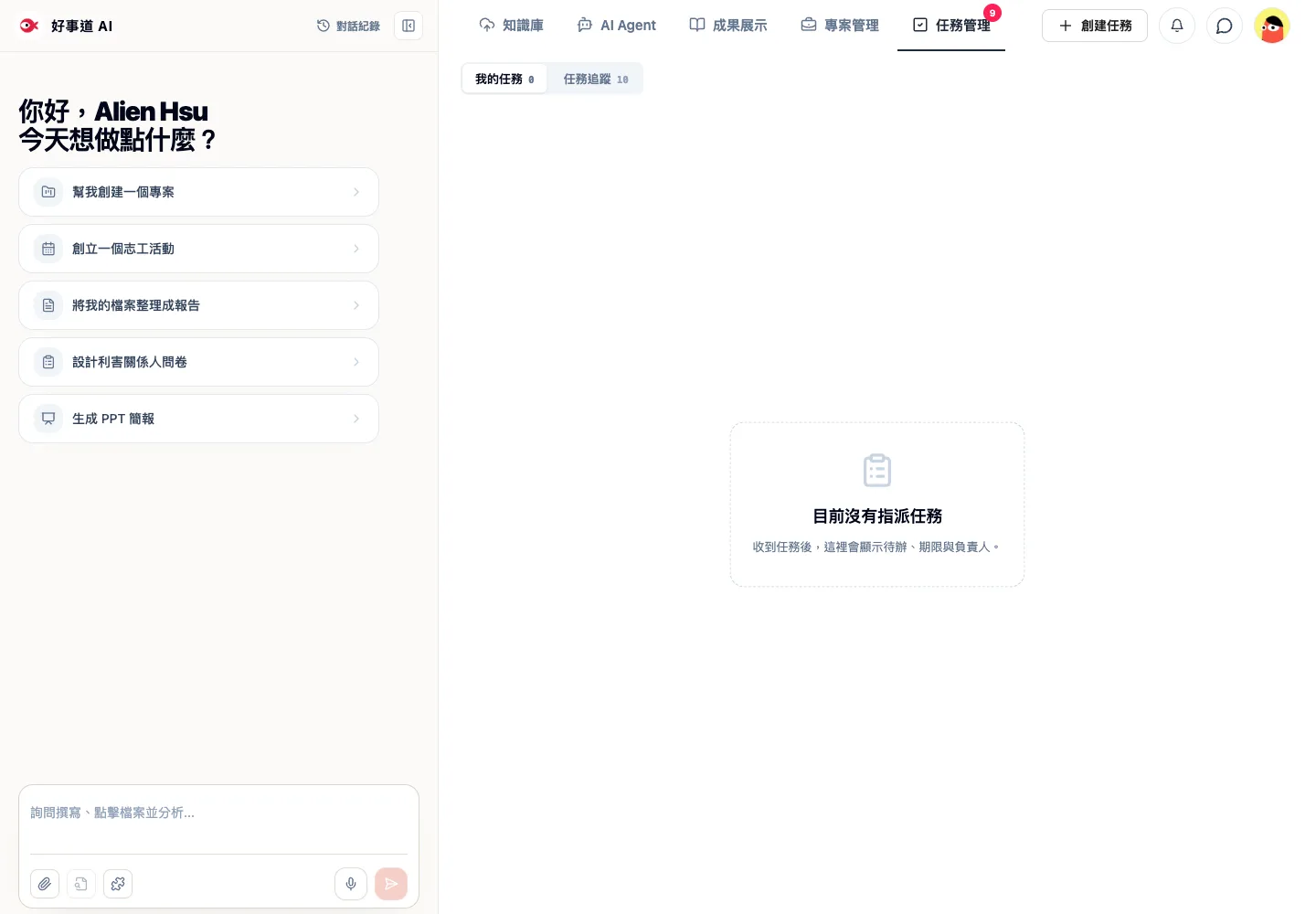
Track missing material with tasks
Instead of discovering incomplete information a week before closeout, create a task for each missing item, assign an owner, and set a deadline. GuppyCubed's task system turns gaps into visible, trackable work.
Use Tag AI in team conversations
When a discussion needs a quick summary or a new task, tag AI in the thread instead of opening another conversation and describing the context again.
Review use-of-funds and outcome content regularly
If you maintain a public donation or outcome page, update its use-of-funds content regularly. Donors and partners should see current information rather than a page that stopped changing when the activity ended.
Establish habits the team can follow
Use dates, topics, and material types in filenames rather than labels such as final-version-two. Describe folder periods and purposes. Retain originals separately from drafts and tell the next person which revision the current deliverable uses.
Run a short weekly review
| Check | Follow-up |
|---|---|
| Failed processing or pending upload | Verify originals and status before retrying |
| Missing task material | Clarify deliverables and ownership |
| Unsupported conclusion | Mark for review and assign evidence collection |
| Outdated public page | Assign an owner to revise and check |
Keep efficiency improvements safe
Avoid duplicate uploads when the real problem is navigation. Distinguish internal and public versions. Give collaborators the required scope and review continued access when work ends.
Establish a maintainable rhythm
Label new material with topic, date, and purpose. Review unfiled items, unfinished processing, and missing ownership weekly. Before important delivery, check sources and disclosure. Each rhythm addresses a different problem; every upload need not trigger full final review.
| Anti-pattern | Problem | Improvement |
|---|---|---|
| “New document” filename | Topic and version are unclear | Add topic, date, or purpose |
| “Please handle” task | No completion definition | Specify delivery and checks |
| Publishing an AI response immediately | Inference or private detail may remain | Review sources and public scope |
| Reimporting everything | Conflicting duplicates | Locate existing sources first |
| One person knows all locations | Handoff depends on memory | Have another member find material |
Agree on three rules
Mark undecided dates and figures as pending. Include source locations and instructions with delivery. Give public versions an accountable reviewer. These habits improve work before every workflow is formalized.
Record reasons for exceptions instead of inventing content for completeness. Good organization makes gaps visible so someone can resolve them.