AI collaboration scenarios for three types of teams
These are suggested workflows, not named customer case studies or performance promises.
General organizations and professional services
Create a project with clear deliverables. Assign tasks, owners and deadlines. Keep relevant conversations, documents and meeting recordings accessible to the team. Once transcripts are processed, ask AI to summarize needs and draft content. Have a person check the meaning and record agreed decisions in the project.
Before delivery, check ownership, deadlines, source accuracy and whether another teammate can find the material.
Read team collaboration, mobile app and knowledge base.
Enterprise ESG and cross-organization teams
Agree on objectives, reporting periods and delivery requirements with partners. Assign responsibilities and collect activity records and questionnaire data. Ask AI to organize a narrative and identify missing information. People check the numbers, methods and publication scope; qualified professionals handle any required assurance.
Avoid mixing reporting periods, double-counting participants or describing a draft as a certified report.
Read questionnaires, professional templates and AI reports.
NGOs, associations, foundations and grant-funded teams
Organize tasks around the grant's deliverables and collect records throughout execution. The mobile app supports recording and importing through other apps' system share menus. Check upload and processing status. Select usable sources, ask AI for a report draft, compare it with grant requirements and have responsible people confirm the result.
Before publication, check permission to use photos and quotations, protect personal information and exclude material that is not approved for disclosure.
Read activities and volunteers, common workflows and Magic Web.
Start with one project
Complete one cycle from task assignment to delivery. Review which information was hard to find, what the draft lacked and what the team can reuse before expanding the workflow.
Turn audience needs into executable work
Each team can start with one deliverable, a source list, and named owners. Materials and judgment responsibilities differ; organizations do not need identical operating models.
| Team | Starting work | First acceptance criterion |
|---|---|---|
| General organizations and services | Meetings, interviews, client needs | A colleague understands the summary and next action |
| Enterprise ESG and partners | Periods, indicators, collection owners | Partners use consistent data definitions |
| NGOs and grant teams | Activity records, responses, deliverables | A report draft can be checked against originals |
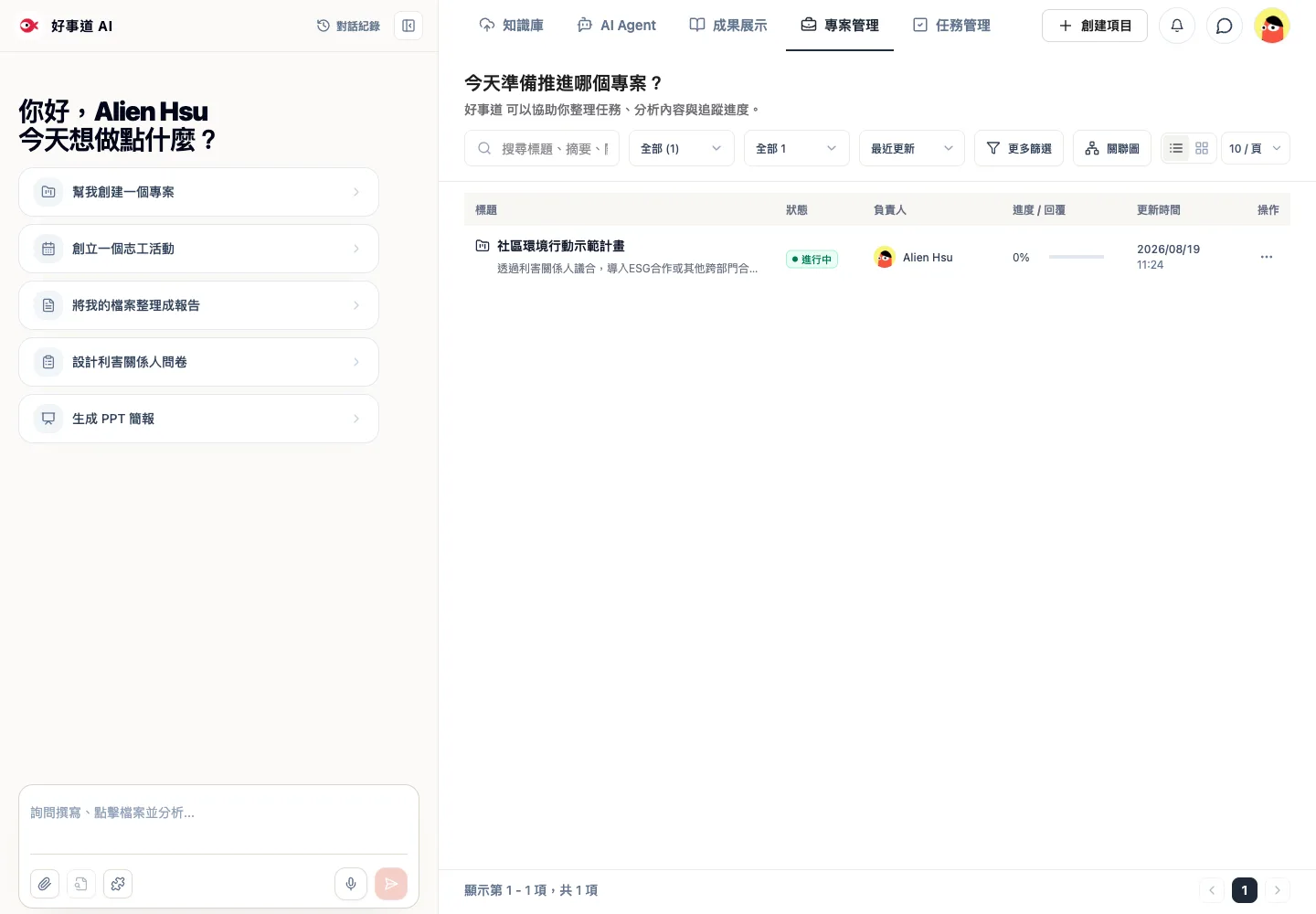
Example: a partner activity
A corporate contact defines the period’s data needs, an implementation team arranges collection, and field members preserve material in the app. An owner checks counts, dates, and citations before preparing a partner draft. This is a workflow example, not a verified partner outcome.
Review before expanding
Check that members know material locations, reviewers can find sources, and the delivery owner understands publication scope. Resolve those issues before adding more projects or organizations.
Adapt shared methods to different deliveries
All three groups can use source organization, ownership, and human review, but delivery purposes differ. Service teams may prioritize proposals, enterprises cross-organization consistency, and NGOs records required by a program.
| Team | First exercise | First check |
|---|---|---|
| General or professional services | Turn a meeting into a proposal outline | Requirements and ownership |
| Enterprise partnerships | Organize partner activity material | Definitions, periods, disclosure |
| NGO or grant team | Turn field records into a work summary | Completed work versus missing material |
Do not combine partner data immediately
Check dates, field definitions, calculations, and permission. “Participation” may mean registration, attendance, or completed service. Ask AI to identify differences and questions before deciding how to combine material.
Develop a public case responsibly
Describe background, roles, features, steps, and supported results. Exclude unapproved names and figures. When evidence is unavailable, publish methods rather than presenting tutorial exercises as customer impact.
Retain a repeatable example and onboarding explanation after the first workflow. Check differences in the next situation before reusing the relevant parts.